
New York City Mayor Zohran Mamdani has spent much of his political career arguing that working people deserve a government willing to fight for them. Yet this week, his administration went to court to stop approximately 25,000 of the lowest-paid employees in New York City’s public schools from receiving an additional $10,000.
The workers at the center of this fight are not highly paid administrators or political appointees. They are paraprofessionals, the men and women who spend their days helping some of New York City’s most vulnerable children learn, communicate, navigate disabilities, manage behavioral challenges and simply make it through the school day.
Their work is essential. Their compensation suggests otherwise.
The City Council unanimously passed the RESPECT Check Act in July, providing eligible paraprofessionals with $10,000 in supplemental compensation during the 2026–27 school year, delivered through four $2,500 payments. The measure became law after Mayor Mamdani declined to sign or veto it. His administration then sued to block it, arguing that the Council improperly circumvented the collective-bargaining process and created a dangerous precedent for municipal labor relations.
There may be a legitimate legal debate about how compensation should be established. But there should be no debate about the underlying reality: New York City paraprofessionals are dramatically underpaid for the responsibilities we ask them to shoulder.
According to the United Federation of Teachers’ salary schedule, starting pay for paraprofessionals is currently about $32,098. Even after the scheduled September 2026 increase, starting compensation will be roughly $33,222. Depending on title, education and longevity, salaries rise from there, but these are hardly comfortable wages in one of America’s most expensive cities.
Calling the proposed $10,000 payment some extravagant giveaway ignores basic arithmetic.
Consider Mayor Mamdani’s own administration’s research.
Earlier this year, the city released its first True Cost of Living measure, designed specifically because conventional poverty statistics fail to capture what it actually costs to live in New York. The report concluded that a single working-age adult without children needs approximately $70,334 a year to meet the city’s true cost of living. A single adult raising children needs approximately $114,568. A two-adult, two-child family needs roughly $166,279.
That means a paraprofessional earning roughly $32,000 to $33,000 is making less than half of what the Mamdani administration’s own report says a single adult needs to achieve basic economic security in New York City.
Even a $10,000 payment would not remotely close that gap.
For me, this issue is also personal.
My mother, Camille Meek, was an educator of deaf and hearing-impaired students in upstate New York during the 1970s and 1980s. I grew up watching firsthand what this kind of work demands, and how little financial security can accompany it.
My mother did far more than stand in front of a classroom. She devoted herself to children who needed someone willing to give them extra attention, patience and opportunity. She took students into our home, fed them and gave them a safe place to stay when they needed one. She worked to give them experiences that circumstances might otherwise have denied them. Her dedication to her students was even chronicled in the Elmira Star-Gazette.
But dedication did not translate into financial comfort.
We lived close to the poverty line. My mother was a highly educated professional doing enormously important work, yet I remember what it meant for our family to stretch a paycheck and make difficult choices. There was an enormous disconnect between the value society placed rhetorically on educators serving children with special needs and what those educators actually brought home.
That was more than four decades ago.
It is difficult to accept that in 2026, we are still having essentially the same conversation.
Today’s paraprofessionals remind me of the people my mother worked alongside and of the work she performed herself: people who do not enter education because they expect to become wealthy, but because they believe children, especially children who face additional obstacles, deserve a chance to succeed.
That personal history makes it impossible for me to look at a $32,000 starting salary in New York City as an abstraction on a government spreadsheet. Behind that number is a person trying to pay rent, buy groceries, commute to work and perhaps raise a family while spending every day caring for someone else’s child.
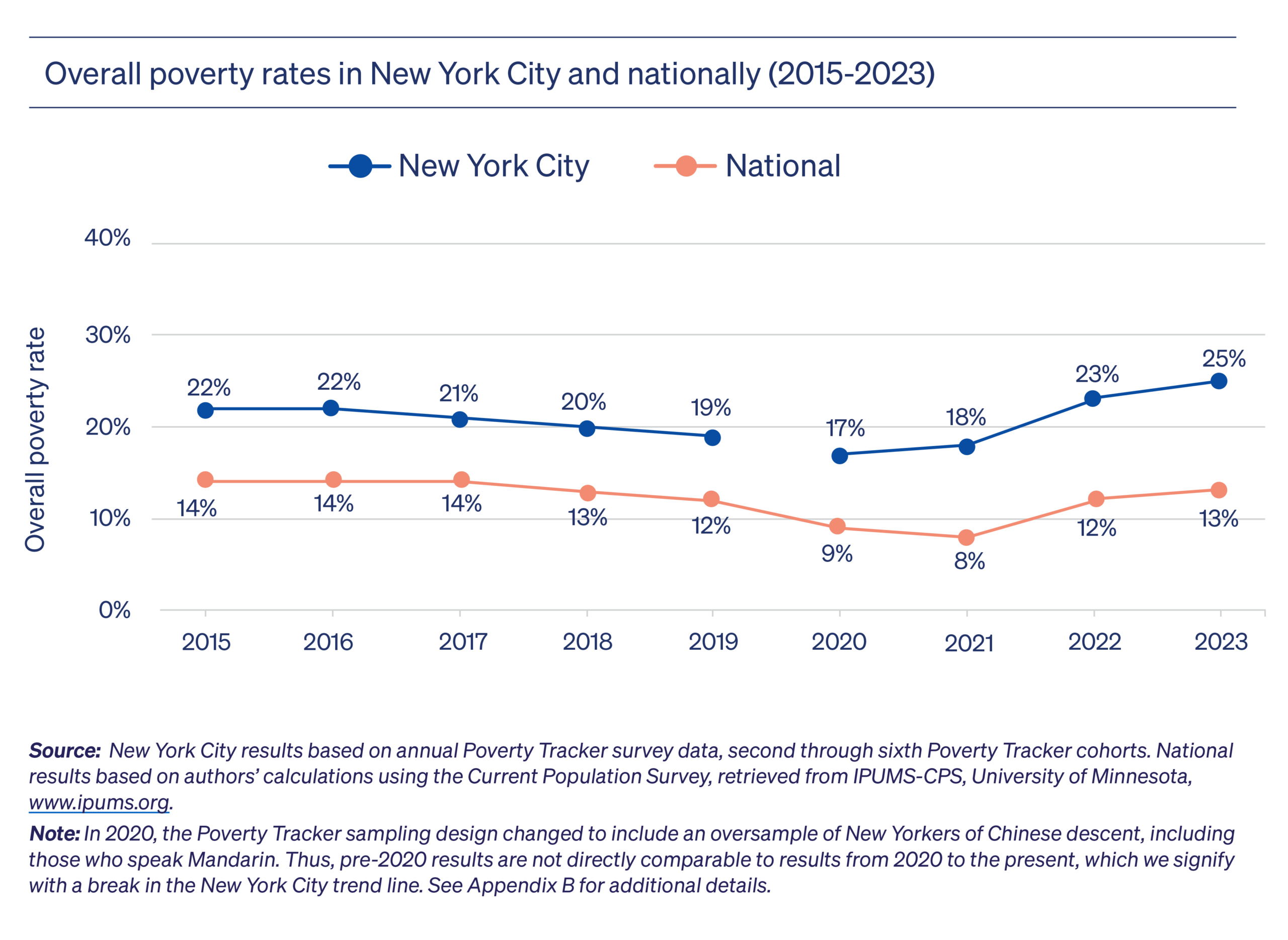
The distinction between the technical poverty line and economic reality matters. Traditional poverty measures suggest roughly 18% to 20% of New Yorkers are poor.
Mamdani’s own True Cost of Living analysis found something much more troubling: 62% of New Yorkers, approximately 5.04 million people, lack the resources necessary to meet the actual cost of living in the city. About 3.58 million New Yorkers earn more than the traditional poverty line but still fall short of economic security.
Many paraprofessionals live squarely inside that gap between officially “not poor” and actually being able to afford New York.
And what do we ask of them in return?
Paraprofessionals work alongside teachers, often providing intensive one-on-one assistance to students with disabilities and other significant needs. They help children remain focused. They assist with mobility and personal needs. They reinforce lessons. They manage difficult behaviors. They help students communicate. They comfort frightened or overwhelmed children. In many classrooms, they provide the individualized attention that allows a teacher to teach everyone else.
When that paraprofessional is absent, the consequences are not theoretical. A child may lose the support written into an individualized education program. A teacher may suddenly have to divide attention between an entire classroom and a student requiring intensive assistance. Parents are left wondering whether their child is receiving the services the school system promised.
It is extraordinarily important work, and frequently thankless work.
There is also a practical financial argument for paying these employees more. New York faces persistent challenges recruiting and retaining paraprofessionals. The City Council estimates the new payments would cost approximately $325 million. That is real money, and taxpayers deserve responsible stewardship of it.
But taxpayers should also ask what chronic vacancies, turnover, recruitment, training, disrupted classrooms and failures to provide mandated services ultimately cost the city.
Mamdani’s administration says its lawsuit is about protecting collective bargaining rather than opposing higher pay. That argument deserves to be acknowledged. Collective bargaining is an important protection for public employees, and governments should be cautious about casually rewriting compensation systems legislatively.
But process cannot become an excuse for paralysis.
If the mayor truly believes paraprofessionals are underpaid, and his administration has publicly acknowledged that they have not been fairly compensated, then the answer should not simply be litigation. The answer should be an immediate commitment to achieve substantially higher compensation through whatever lawful mechanism his administration believes is appropriate.
These workers should not have to choose between respecting “the process” and earning enough to survive.
There is an uncomfortable contradiction here for a mayor who built his political identity around affordability. New York cannot proclaim itself a champion of working people while paying some of the people entrusted with its most vulnerable children wages that its own economic analysis says are nowhere near sufficient to live here.
The $10,000 RESPECT payment will not make paraprofessionals wealthy. It will not even bring many of them close to New York City’s true cost of living.
But it could help pay rent. It could buy groceries. It could cover transportation, utilities or medical bills. It could persuade an experienced paraprofessional contemplating another job to remain with the child who has come to depend on them.
Mayor Mamdani should reconsider this fight.
Because sometimes respecting workers means more than praising them, defending their bargaining rights or calling their work indispensable.
Sometimes respect means putting it in their paycheck.
