
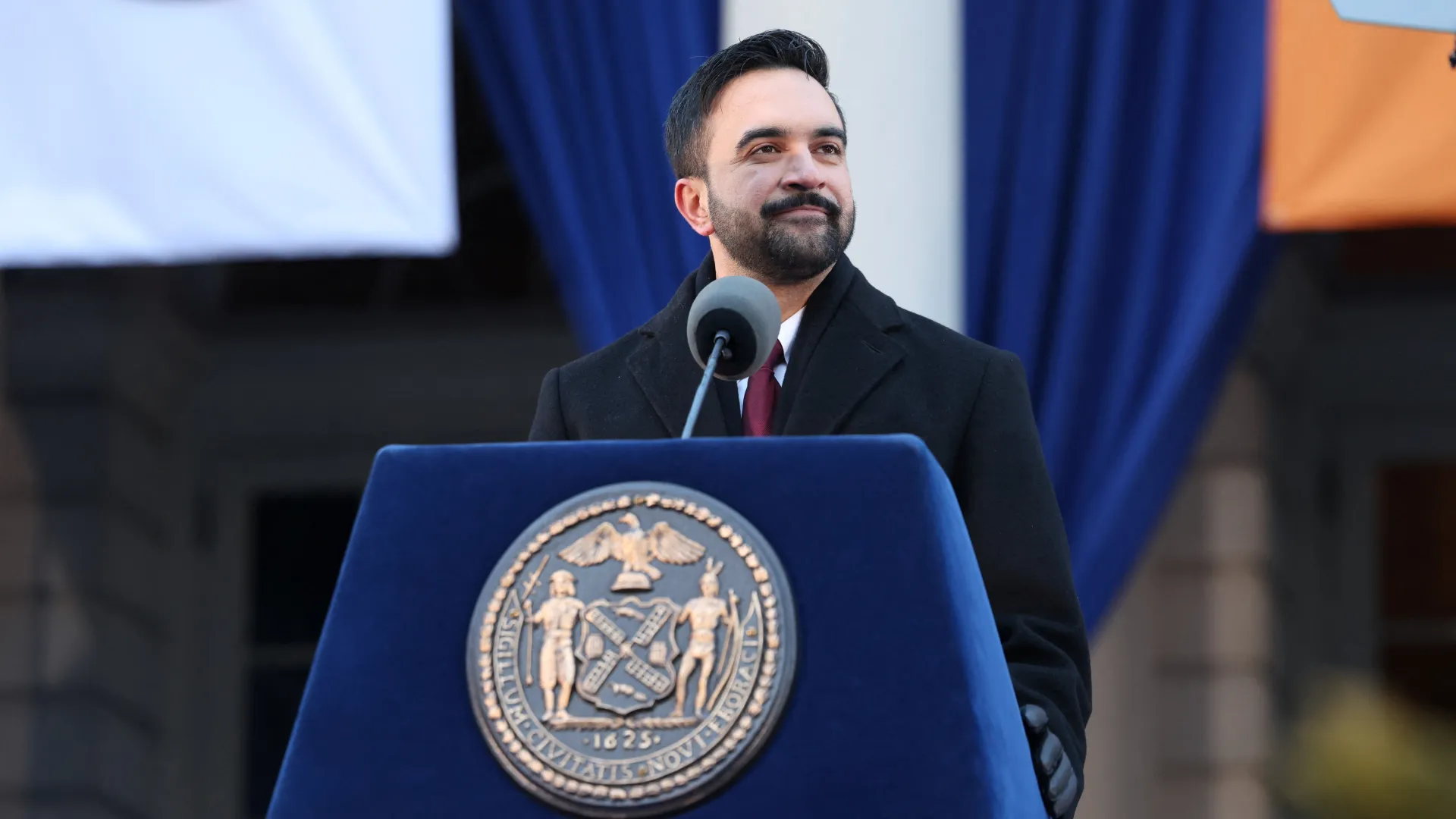
When public officials are entrusted with the power to represent millions of people, moral clarity is not optional, it is essential. In recent months, New York’s political landscape has become a flashpoint: should elected leaders condemn language that evokes violence, even when it emerges from movements they broadly sympathize with?
This question came into sharp focus after Assemblymember Zohran Mamdani, the newly sworn-in mayor of New York City, repeatedly declined to denounce the chant “globalize the intifada,” a slogan widely used at pro-Palestinian rallies since the Hamas attacks of October 7, 2023.
Mamdani, a democratic socialist and vocal advocate for Palestinian rights, argued that he “does not use that language” and that his “role is not to police speech.” He described the phrase as an expression of “a desperate desire for equality and human rights” rather than a call for violence. Yet many New Yorkers, particularly within the Jewish community, found his stance deeply troubling.
The phrase “intifada” is not abstract. Historically, it refers to two Palestinian uprisings (1987–1993 and 2000–2005) that included both civil disobedience and violent attacks on Israeli civilians. To “globalize” that concept can be understood, at best, as a metaphor for international solidarity, and at worst, as a call to expand violent resistance worldwide.
For Jewish New Yorkers, home to the largest Jewish population outside Israel, the refusal of the mayor of the largest city in America to clearly reject a slogan associated with violence against Jews evokes legitimate fear. Senator Kirsten Gillibrand warned: “Globalize the intifada is a phrase used by those who wish to see harm done to Jewish people and to the State of Israel. Any leader of this city must denounce it.”
When public figures equivocate on such language, they erode the social contract that binds diverse communities together. Words can either heal divisions or deepen them. In post-9/11 New York, vigilance against all forms of extremism, religious, political, or ethnic, became civic responsibility. To equate silence with tolerance risks reopening old wounds. It sends a message that some communities’ safety is negotiable in the marketplace of political expedience.
Leadership requires distinguishing between the defense of speech and the endorsement of dangerous rhetoric. When a slogan historically associated with violence is adopted in the public square, leaders must clarify its implications. To stay silent or to hide behind linguistic neutrality is to abdicate responsibility for the moral weight of one’s platform.
House Minority Leader Hakeem Jeffries expressed this expectation plainly: “The phrase ‘globalize the intifada’ is unacceptable. It’s incumbent upon any elected leader, especially one who seeks to represent this city, to make that clear.”
Democracies depend on leaders who can uphold universal values even when doing so may cost them politically. History teaches us that the normalization of radical language, particularly language invoking violence or targeting ethnic groups, can corrode civic trust and embolden extremists.
The danger here is not confined to one side of the ideological spectrum. The far right has its own record of weaponizing language for violence. The lesson is universal: when leaders refuse to confront language that dehumanizes or glorifies violence, extremism gains legitimacy.
New York’s strength has always been its pluralism. That coexistence depends on the clear rejection of any slogan, ideology, or movement that suggests violence as a solution to injustice.
The responsible path is neither censorship nor silence, but moral courage. Public officials can, and must, defend Palestinian human rights while clearly rejecting rhetoric that evokes or excuses violence. They can affirm freedom of expression without allowing that freedom to becomes normalization of hate speech.
This distinction is not semantic; it is the cornerstone of civic trust. As the Combat Antisemitism Movement stated: “Jewish New Yorkers are right to be alarmed. Silence in the face of slogans that recall violence is not neutrality, it is complicity.”
If the city’s new leadership wishes to govern a metropolis as diverse and fragile as New York, it must begin by demonstrating that safety and respect for all communities are non-negotiable. Words matter. And when words carry the weight of history, they demand a response equal to their gravity.
