
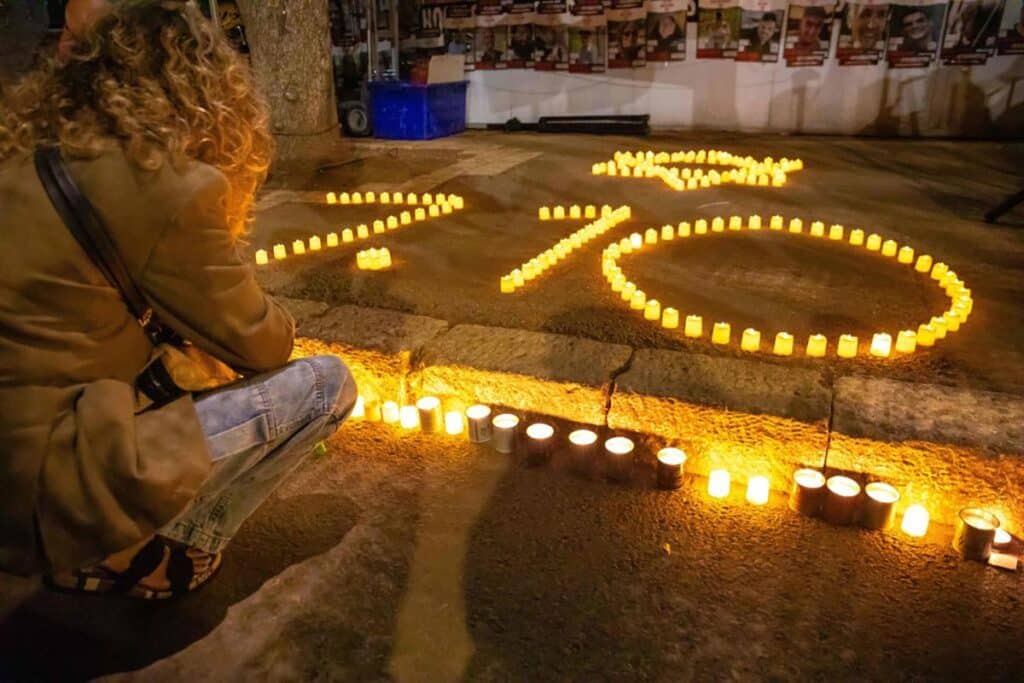
Three years after October 7, we owe the victims something clear and lasting: remembrance without qualification. The Hamas-led massacre and the taking of hostages deserve unequivocal condemnation. We also owe Palestinian civilians recognition of their humanity and concern for their suffering. A commitment to protecting innocent life must be strong enough to sustain both obligations.
This observance asks us to remember people whose lives were interrupted while attending a music festival, spending time with family, or simply being at home. It asks us to recognize the anguish of those abducted, the grief of those who buried loved ones, and the lasting wounds carried by survivors. Their experiences deserve our attention beyond a single day of commemoration.
As a witness to the events at Ground Zero on September 11, 2001, I understand why remembrance becomes a responsibility. The attacks have distinct histories and circumstances. What connects my concern for their victims is the conviction that people murdered by terrorists deserve to be remembered as human beings, with names, families, aspirations, and futures that should have been theirs.
Remembering October 7 requires moral clarity. Deliberately attacking civilians and abducting people are indefensible. Political grievances cannot justify those acts. Explanations of a conflict’s history must never become excuses for the murder of people who bear no personal responsibility for the circumstances surrounding them. We should be able to say this plainly, without hesitation and without attaching conditions to our condemnation.
That same commitment to human dignity requires us to care about Palestinian civilians. Families in Gaza have endured death, displacement, destruction, and profound uncertainty. Children deserve food, medical care, shelter, education, and the chance to grow up safely. Parents deserve the opportunity to protect their families. Their suffering demands compassion and a serious commitment to humanitarian assistance and civilian protection.
Compassion carries no requirement to endorse Hamas or excuse its crimes. Concern for Palestinian lives can exist alongside solidarity with Israeli victims and a commitment to Israel’s security. Indeed, protecting civilians should be central to any credible vision of security. A future built on continuing fear, deprivation, and grief will leave families vulnerable and make lasting peace harder to achieve.
We should resist the pressure to treat empathy as a declaration of political allegiance. People can grieve murdered Israelis and care about bereaved Palestinians. They can condemn terrorism and scrutinize military decisions that endanger civilians. Each position should be judged on its principles and evidence. Demanding that people disregard one community’s suffering to acknowledge another’s diminishes our capacity for honest discussion.
Collective blame makes that discussion more dangerous. Jewish Americans are not responsible for every decision made by Israel’s government. Palestinian civilians are not interchangeable with Hamas. Muslim Americans should not be treated as suspects because of their faith. Criticism must address particular actions, institutions, and leaders. Assigning guilt to entire communities gives prejudice permission to enter conversations that urgently need judgment and care.
For Americans, these principles carry responsibilities close to home. We should confront antisemitism in our schools, workplaces, houses of worship, and public life. We should also challenge anti-Muslim hatred and the dehumanization of Palestinians. We can defend vigorous political disagreement while insisting that threats, harassment, and celebration of attacks on civilians have no place in a community committed to equal dignity.
Remembrance also requires accuracy. Educators and civic leaders should preserve verified accounts of October 7 and make space for survivor testimony. Students deserve the tools to distinguish evidence from propaganda and political criticism from prejudice. They should learn that terrorism targets human beings, and that the dignity of victims survives every argument about governments, borders, policies, and historical grievances.
Care must continue after the commemorations conclude. Survivors, former hostages, bereaved families, and communities affected by violence need sustained support. Palestinian families living through devastation need humanitarian assistance and opportunities for recovery. We should support efforts that help people rebuild their lives, including mental health care, while recognizing that healing takes time and cannot be demanded on someone else’s schedule.
Political leaders have a duty to translate concern into action. That means working toward civilian protection, reliable humanitarian access, accountability for abuses, and security arrangements that give Israelis and Palestinians a credible prospect of living safely. No single column can resolve this conflict. But we can insist that protecting human life remain a governing obligation throughout diplomacy, policy, and public debate.
On this third observance of October 7, we should remember the victims with respect and stand beside those still carrying the consequences. We should condemn Hamas’s massacre clearly and affirm the humanity of Palestinian civilians just as clearly. These commitments belong together. Our concern becomes more credible when it remains consistent, especially when public pressure encourages us to choose whose pain deserves acknowledgment.
We should ask ourselves what our words make possible: greater understanding, practical assistance, and solidarity—or another round of accusations that leaves grieving families feeling even more isolated and unheard.
The dead deserve faithful remembrance. The living deserve protection, care, and a future. Upholding our shared humanity requires us to honor all three responsibilities, with the courage to speak clearly and the compassion to act.
