
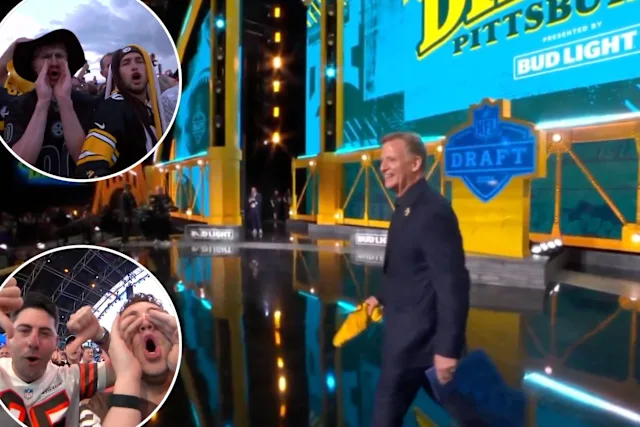
Every April, a familiar ritual unfolds at the NFL Draft. The commissioner walks to the podium, smiles, and is met with a thunderous chorus of boos. In 2026, as in years past, Roger Goodell was booed the moment he appeared. It has become so predictable that it is almost part of the entertainment itself. Yet beneath the laughter and spectacle lies a valuable lesson about leadership: sometimes, when the crowd does not like what you do, you still have to keep leading.
That is one of the hardest truths in modern life. Too many people now mistake popularity for principle. They believe leadership means being applauded, approved of, or trending in the right direction on social media. But real leadership has never worked that way. Real leadership often requires making decisions that are unpopular in the moment but necessary in the long run.
The commissioner of the NFL is not elected by fans. He is hired to guide the league, protect its future, negotiate its business interests, and make difficult calls when controversy arises. Fans may disagree with those decisions. They may despise rule changes, discipline rulings, franchise relocations, or labor negotiations. But the job is not to win cheers from the stands. The job is to lead.
That distinction matters far beyond football.
We live in an era where many leaders are governed by reaction. Poll numbers, click rates, outrage cycles, and public sentiment can shift by the hour. Too often, institutions bend to the loudest voices rather than the wisest course. But progress rarely comes from those who only move when it is safe. Progress comes from those willing to stand in the storm.
Consider the growing movement to champion mental health. For decades, too many people suffered in silence because discussing depression, anxiety, trauma, addiction, or suicidal thoughts carried stigma. It was easier for leaders to avoid the topic than confront it. Yet true leadership means speaking openly even when others are uncomfortable. It means building workplaces where asking for help is seen as strength, not weakness. It means investing in counseling, prevention, and education long before applause arrives.
The same is true in the fight against human trafficking. This issue often hides in plain sight, buried beneath politics, bureaucracy, and public discomfort. It is easier to ignore exploitation than to confront the systems that allow it to flourish. Real leadership requires more than hashtags or awareness months. It means pursuing policy reform, empowering law enforcement, supporting survivors, and demanding accountability from industries and institutions that profit from looking away. Those efforts can be inconvenient. They can challenge entrenched interests. They can invite criticism. That is precisely why they require leaders.
As America approaches United States Semiquincentennial, we have another test of leadership before us. Milestone anniversaries are not merely celebrations; they are mirrors. They ask whether we still embody the ideals we claim to cherish. Liberty, equality under the law, civic responsibility, and opportunity are not self-sustaining. They must be renewed by each generation.
There will be voices that say patriotism is outdated, that unity is naïve, that civic pride is performative. But leadership is not surrendering national identity to cynicism. Leadership is recognizing both our flaws and our promise, then choosing to build rather than tear down. It is possible to love a country enough to criticize it and love it enough to improve it. America at 250 should not simply commemorate the past. It should challenge us to deserve the future.
The same lesson applies as our nation prepares for the 25th observance of September 11 attacks. A quarter century later, millions of Americans were too young to remember that day or were not yet born. Memory fades. Division grows. Historical understanding becomes thinner.
Yet leadership demands that we remember not only the horror of September 11, but the extraordinary unity of September 12. In one of the darkest moments in American history, people ran toward danger to save strangers. Flags flew from porches without prompting. Political differences seemed smaller than our common humanity. Leadership today means carrying forward that spirit when it is no longer easy or automatic.
We do not honor 9/11 merely through ceremonies. We honor it when we become better neighbors, more engaged citizens, and more compassionate communities. We honor it when we reject hatred and embrace service. We honor it when we choose resilience over resentment.
That is why the boos raining down on Roger Goodell each spring are more instructive than they first appear. He steps forward anyway. He smiles anyway. He reads the names anyway. He continues doing the job despite public disapproval. Whether one agrees with his leadership or not, the symbolism is powerful: criticism is not disqualification.
Too many talented people stay silent because they fear being booed. They fear backlash, ridicule, or rejection. They want certainty before action and applause before courage. But leadership has never offered those guarantees.
If you advocate for mental health, someone may mock you. Keep leading.
If you fight trafficking and exploitation, someone may resist you. Keep leading.
If you speak about national unity in a divided time, someone may dismiss you. Keep leading.
If you ask people to remember sacrifice and service twenty-five years after tragedy, someone may say it no longer matters. Keep leading.
The crowd is not always right. Noise is not wisdom. Approval is not character.
History tends to remember those who stood firm when standing firm was unpopular. The greatest leaders were often doubted in their own time. They were criticized, booed, rejected, and misunderstood. Yet they moved forward because conviction mattered more than comfort.
So when the next commissioner walks to the podium and the boos rain down once again, listen carefully. Hidden beneath the jeers is a timeless reminder for all of us.
Sometimes leadership means walking into the noise, doing the right thing anyway, and never confusing criticism with failure.
Share This Podcast, Choose Your Platform!
About the Author: Chris Meek
