
At the opening of the Obama Presidential Center in Chicago, former President Barack Obama offered a message that was less about his presidency and more about the future of the nation. In an era defined by division, distrust, and political tribalism, Obama reminded Americans that democracy is not self-sustaining. It depends upon citizens who are willing to participate, engage, and contribute to something larger than themselves.
His remarks centered on a simple but profound idea: the strength of America has always been found in the word “we.”
That message resonates deeply with the central theme of my forthcoming book, America as a Cultural Mosaic. While political leaders and media commentators often portray the United States as a nation fractured by differences, I believe the opposite is true. America’s greatness has never come from uniformity. It has come from our ability to unite people from different backgrounds, beliefs, faiths, ethnicities, and experiences into a common national identity.
Obama’s emphasis on civic engagement and collective responsibility serves as a timely reminder that the American experiment has always depended on the successful blending of diverse pieces into a greater whole.
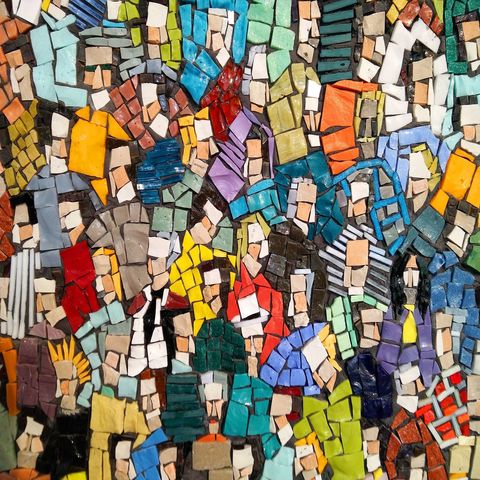
The metaphor I use in America as a Cultural Mosaic differs from the traditional “melting pot” narrative. In a melting pot, individual distinctions disappear. The ingredients become indistinguishable from one another. A mosaic, however, preserves the uniqueness of every piece while creating something beautiful and meaningful when viewed together.
America was never intended to erase individual identities. Rather, it was designed to create a framework where people could maintain their unique heritage while embracing shared civic values rooted in liberty, equality, opportunity, and personal responsibility.
That distinction matters now more than ever.
For too long, our national conversation has focused almost exclusively on what separates us. Political discourse increasingly rewards outrage. Social media algorithms amplify conflict. Educational institutions, corporations, and government leaders often emphasize group differences while neglecting the values that unite us.
The result has been a growing sense of fragmentation.
Yet history tells a different story.
The United States has repeatedly overcome periods of profound division because Americans ultimately chose common purpose over tribal allegiance. We survived a Civil War that threatened to destroy the Union. We emerged stronger from economic depressions, world wars, terrorist attacks, and social upheaval. We did so not because we agreed on everything, but because we agreed on enough.
That shared commitment is the foundation upon which democracy rests.
Obama’s comments about civic participation point directly to this reality. Democracy is not merely a system of government. It is a culture. It requires citizens who recognize that their rights are accompanied by responsibilities. It demands engagement rather than apathy, dialogue rather than demonization, and service rather than self-interest.
In many ways, the Obama Presidential Center itself reflects this philosophy. Unlike traditional presidential libraries that primarily preserve artifacts and historical records, the Center is designed as a civic campus intended to inspire future generations of leaders. Its purpose is not simply to remember the past but to encourage participation in shaping the future.
That mission aligns with a principle that has guided much of my own work.
As a survivor of Ground Zero on September 11, 2001, I witnessed firsthand how tragedy can either divide a society or unite it. In the days and weeks following the attacks, Americans experienced a renewed sense of shared identity. Political affiliations mattered less. Geographic boundaries mattered less. Differences that normally dominated headlines were temporarily overshadowed by a collective understanding that we were all Americans.
The phrase “September 12th America” has become shorthand for that spirit of unity.
Unfortunately, much of that spirit has faded.
Today, Americans often define themselves by what team they belong to rather than what nation they share. Political opponents are increasingly viewed not as fellow citizens with different perspectives but as enemies. Public trust in institutions continues to decline. The social fabric that once connected neighborhoods, communities, and civic organizations has weakened.
This trend threatens the very concept Obama spoke about in Chicago.
A functioning democracy requires more than elections. It requires a culture of mutual respect and a belief that our shared future matters more than our temporary disagreements.
The mosaic offers a path forward.
It reminds us that diversity and unity are not opposing concepts. They are complementary. The beauty of a mosaic comes from the uniqueness of its individual pieces and the larger picture they create together. Remove either element, and the mosaic loses its meaning.
This is why the future of America depends not on choosing between diversity and national identity, but on strengthening both simultaneously.
We should celebrate the contributions of every community that has helped build this nation. We should teach honest history while also recognizing the extraordinary progress America has achieved. We should encourage vigorous debate while rejecting the notion that disagreement equals hostility. Most importantly, we should cultivate a renewed appreciation for the civic values that bind us together.
The challenge facing our country is not that we have become too diverse. It is that we have forgotten how to see ourselves as part of the same picture.
Obama’s remarks serve as a reminder that democracy ultimately depends on the willingness of ordinary citizens to invest in one another and in the nation they share. The word “we” remains powerful because it recognizes a fundamental truth: none of us succeeds alone.
The story of America has never been about individual pieces standing apart. It has been about those pieces coming together to create something larger than themselves.
As we approach the 250th anniversary of the Declaration of Independence, we have an opportunity to rediscover that truth. We can continue down a path of polarization and fragmentation, or we can recommit ourselves to the ideals that have sustained the Republic for nearly two and a half centuries.
The choice before us is not whether we will be different from one another. We always will be.
The real question is whether we will remember that those differences are not flaws in the American story, they are the very pieces that make the mosaic possible.
If we do, the word “we” may once again become the most powerful word in our democracy.
